Taylor Swift’s Eras Tour has had an estimated $4.6 billion impact on the US economy. This seems absurd at first, but HVS analysis reveals that Swift’s tour is an immense outlier from other concert tours in attracting attendees from out of town. More than 3.7 million people travelled more than 100 miles from home to see Swift perform.
Industry Insights
We have written thousands of articles about all aspects of hospitality, including valuations, investing, lending, operations, asset management, and much more.
Look What You Made Me Do To The U.S. Economy (Taylor's Version)
Taylor Swift’s Eras Tour has had an estimated $4.6 billion impact on the US economy. This seems absurd at first, but HVS analysis reveals that Swift’s tour is an immense outlier from other concert tours in attracting attendees from out of town. More than 3.7 million people travelled more than 100 miles from home to see Swift perform.
Hotel Operators Get Creative To Enhance Guest Revenue Capture
As HVS associates travel nationwide and experience new hotels, or newly renovated and revitalized properties, we are seeing many owners creating innovative ways to generate revenue. This article lists just a few ways we’ve recently come across.
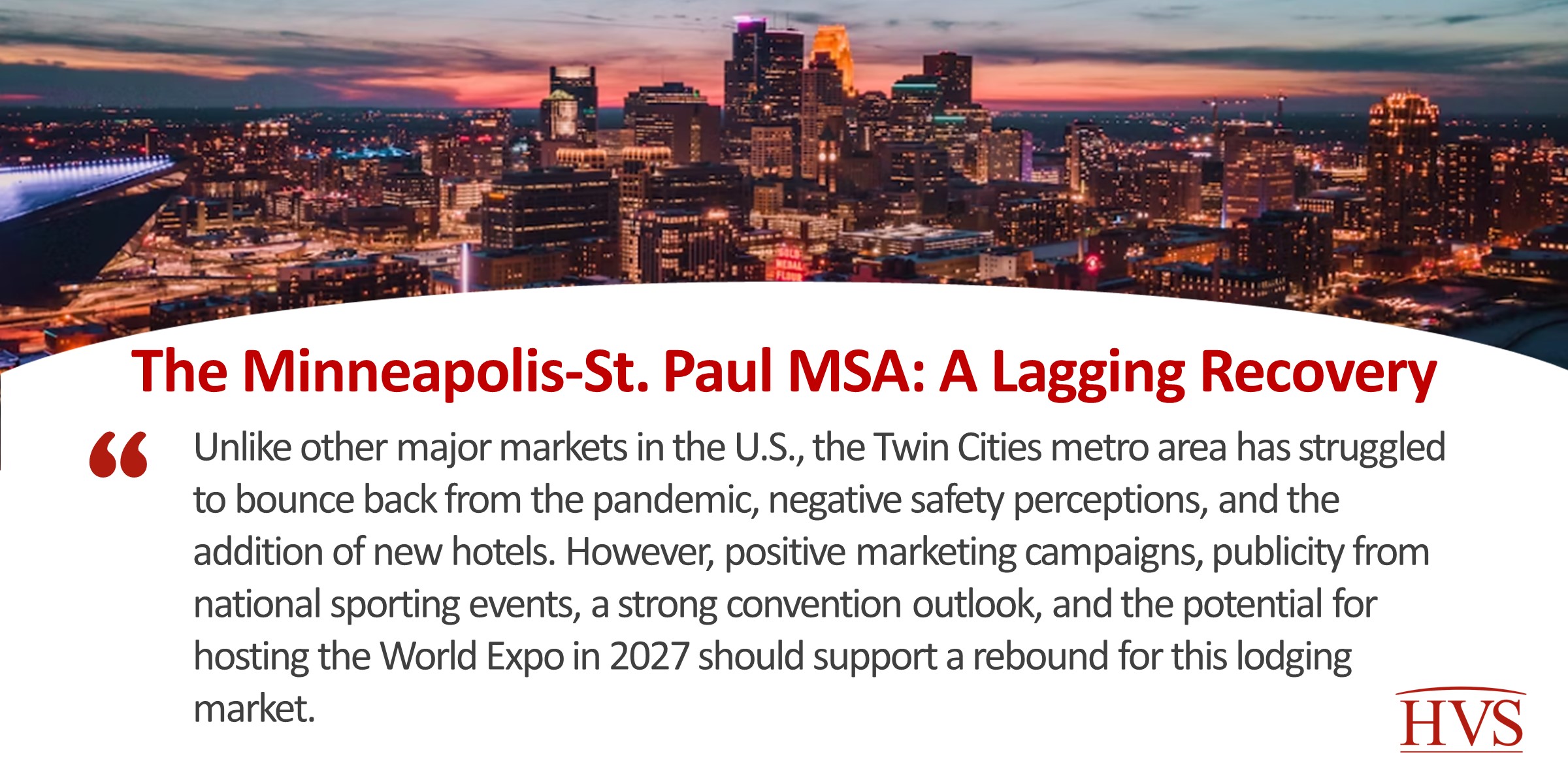
The Minneapolis-St. Paul MSA: A Lagging Recovery
Unlike other major markets in the U.S., the Twin Cities metro area has struggled to bounce back from the pandemic, negative safety perceptions, and the addition of new hotels. However, positive marketing campaigns, publicity from national sporting events, a strong convention outlook, and the potential for hosting the World Expo in 2027 should support a rebound for this lodging market.
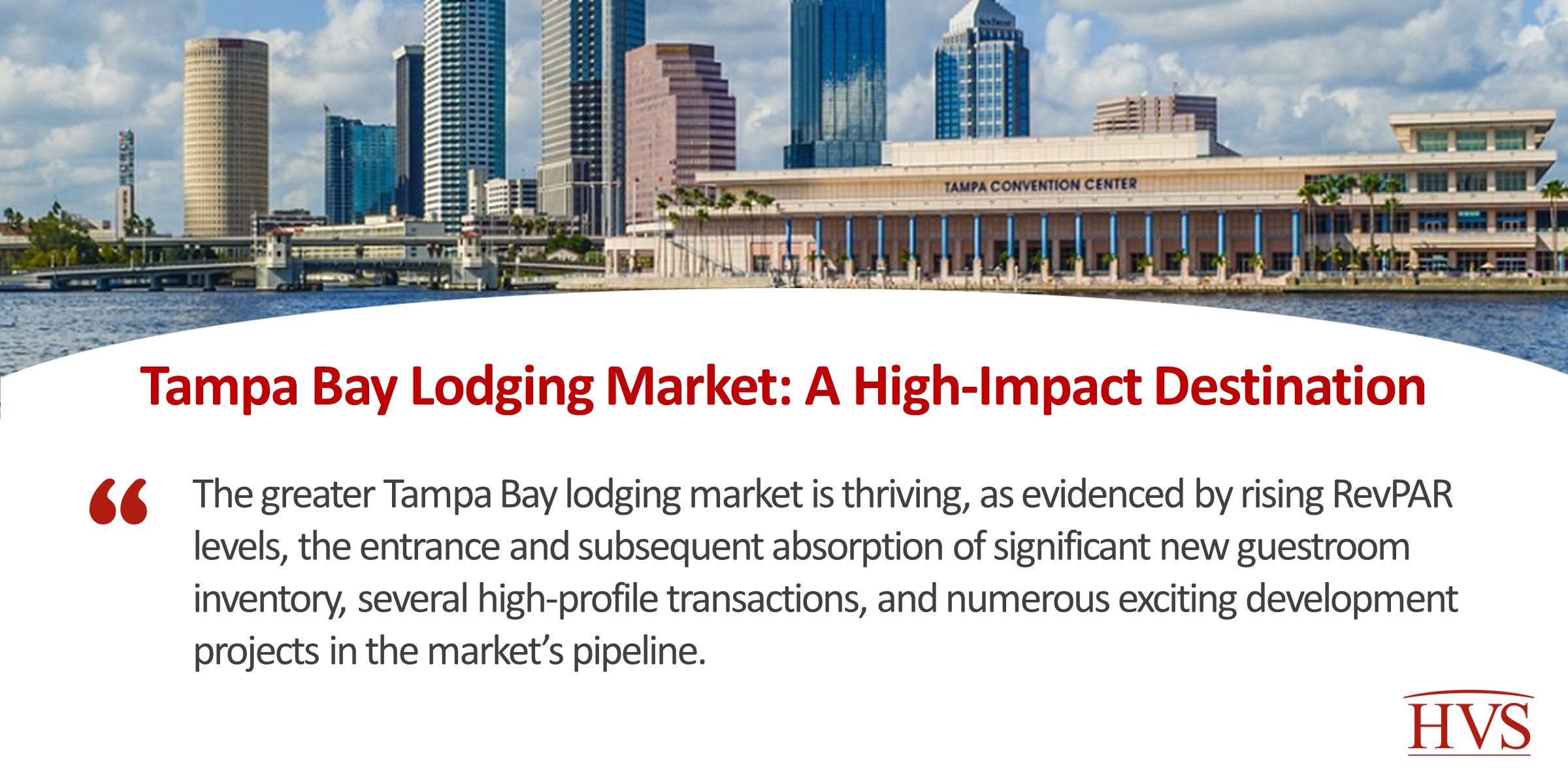
Tampa Bay Lodging Market: A High-Impact Destination
The greater Tampa Bay lodging market is thriving, as evidenced by rising RevPAR levels, the entrance and subsequent absorption of significant new guestroom inventory, several high-profile transactions, and numerous exciting development projects in the market’s pipeline.
Hotel Market Recovery – Minneapolis-St. Paul
Reeling from the impact of new supply, seasonality, civil unrest, and a global pandemic, Minneapolis-St. Paul hotels faced a staggering RevPAR drop in 2020, worse than most cities in the United States. While the greater metro-area hotel market has begun to bounce back, it is at a much a slower pace than the national rebound. What has the recovery looked like thus far? When will the market return to pre-pandemic levels?
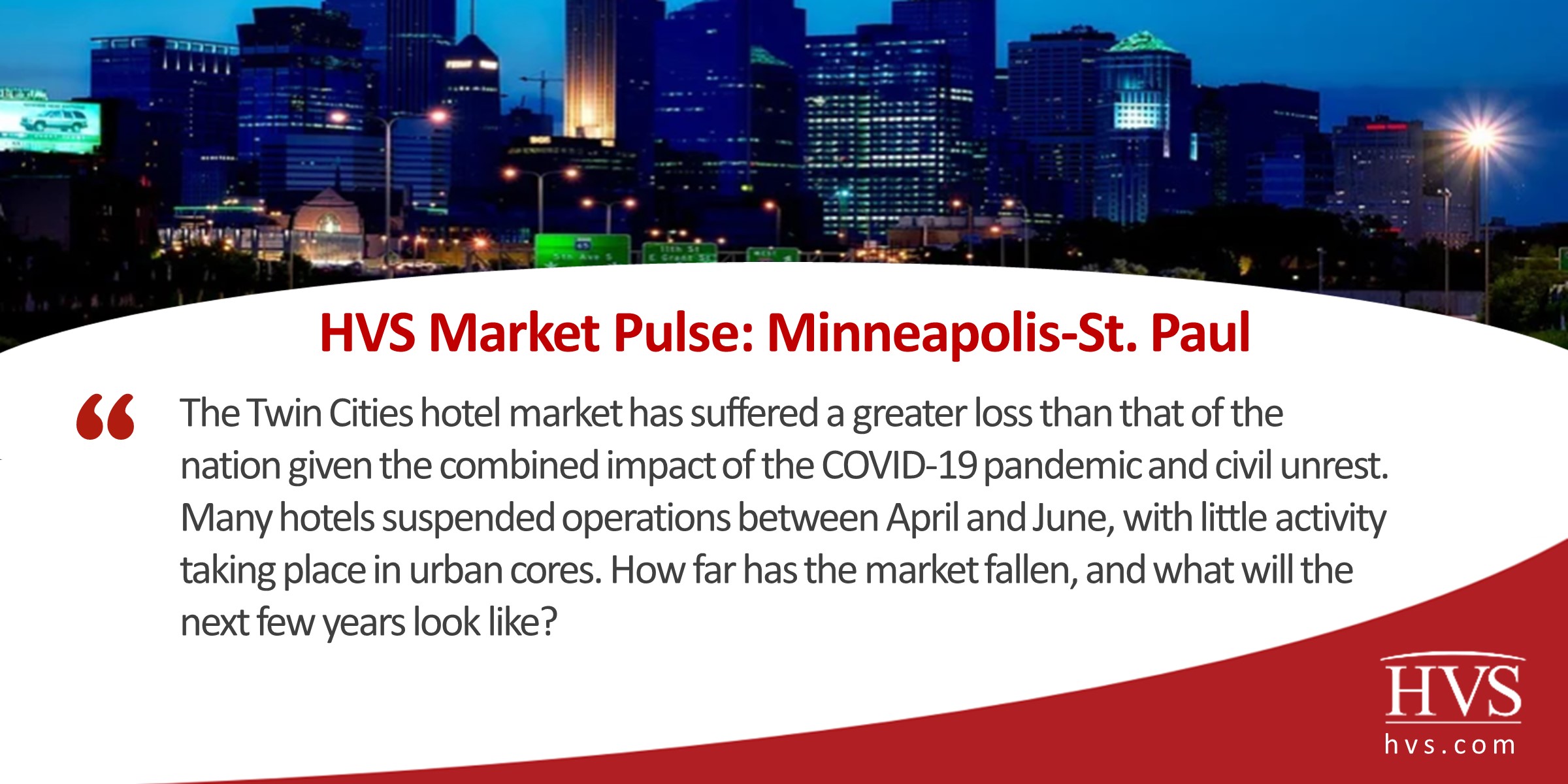
HVS Market Pulse - Minneapolis-St. Paul
The Twin Cities hotel market has suffered a greater loss than that of the nation given the combined impact of the COVID-19 pandemic and civil unrest. Many hotels suspended operations between April and June, with little activity taking place in urban cores. How far has the market fallen, and what will the next few years look like?
HVS Market Pulse: Minneapolis-St. Paul Lodging Market Perceptions
Albeit often not the winter weather, the lower cost of living, numerous leisure and recreational attractions, and the presence of Fortune 500 companies drives the appeal of the Twin Cities. While 2018 was a record year for the metro hospitality market, 2019 was less profitable for many of the roughly 370 hotels in the hub of the nation’s friendliest state.
Taking the Pulse of the Nation’s Largest Hotel Markets
HVS C&V leaders offer the pulse of their markets heading into the fall season. Out of 23 markets discussed, ten are rated as hot, nine are rated as mild, and the remaining four are rated as cooling.
HVS U.S. Hotel Development Cost Survey 2018/19
Each year, HVS researches and compiles development costs from our database of actual hotel construction budgets. This source now provides the basis for our illustrated total development costs per room/per product type.
HVS Market Pulse: Minneapolis - After the Super Bowl
Minneapolis is home to many Fortune 500 companies and more than 11,000 hotel rooms. High quality of life, diversity of employers, and leisure attractions continue to entice demand and an ensuing level of hotel development to the area.
Industry Insights
We have written thousands of articles about all aspects of hospitality, including valuations, investing, lending, operations, asset management, and much more.
As HVS associates travel nationwide and experience new hotels, or newly renovated and revitalized properties, we are seeing many owners creating innovative ways to generate revenue. This article lists just a few ways we’ve recently come across.
Unlike other major markets in the U.S., the Twin Cities metro area has struggled to bounce back from the pandemic, negative safety perceptions, and the addition of new hotels. However, positive marketing campaigns, publicity from national sporting events, a strong convention outlook, and the potential for hosting the World Expo in 2027 should support a rebound for this lodging market.
The greater Tampa Bay lodging market is thriving, as evidenced by rising RevPAR levels, the entrance and subsequent absorption of significant new guestroom inventory, several high-profile transactions, and numerous exciting development projects in the market’s pipeline.
Reeling from the impact of new supply, seasonality, civil unrest, and a global pandemic, Minneapolis-St. Paul hotels faced a staggering RevPAR drop in 2020, worse than most cities in the United States. While the greater metro-area hotel market has begun to bounce back, it is at a much a slower pace than the national rebound. What has the recovery looked like thus far? When will the market return to pre-pandemic levels?
The Twin Cities hotel market has suffered a greater loss than that of the nation given the combined impact of the COVID-19 pandemic and civil unrest. Many hotels suspended operations between April and June, with little activity taking place in urban cores. How far has the market fallen, and what will the next few years look like?
Albeit often not the winter weather, the lower cost of living, numerous leisure and recreational attractions, and the presence of Fortune 500 companies drives the appeal of the Twin Cities. While 2018 was a record year for the metro hospitality market, 2019 was less profitable for many of the roughly 370 hotels in the hub of the nation’s friendliest state.
HVS C&V leaders offer the pulse of their markets heading into the fall season. Out of 23 markets discussed, ten are rated as hot, nine are rated as mild, and the remaining four are rated as cooling.
Each year, HVS researches and compiles development costs from our database of actual hotel construction budgets. This source now provides the basis for our illustrated total development costs per room/per product type.
Minneapolis is home to many Fortune 500 companies and more than 11,000 hotel rooms. High quality of life, diversity of employers, and leisure attractions continue to entice demand and an ensuing level of hotel development to the area.
Robust demand in urban centers continues to drive Canadian hotel values despite high interest rate environment.