Greater Houston’s lodging market is stabilizing, with distinct performance differences across submarkets. While 2024 posted strong results lifted by major events and weather-related displacement, inflation-adjusted levels show that real-dollar gains over 2019 are more modest. As 2025 has unfolded, differences between the city and outlying submarkets have become clearer as the market returns to more typical operating patterns.
HVS discusses the main hotel transactions that took place in the first half of 2025 and looks at the trends in single-asset and portfolio transactions over the years.
Austin, Dallas, Houston, and Fort Worth are pursuing convention center expansions totaling $7.6 to $7.8 billion, with San Antonio considering an additional $900 million project. These developments are largely enabled by Texas’s innovative financing mechanisms, such as Project Financing Zones. This article examines the scope of these projects and their policy foundations, while analyzing how they shape both Texas’s internal competition and its national positioning in the convention industry.
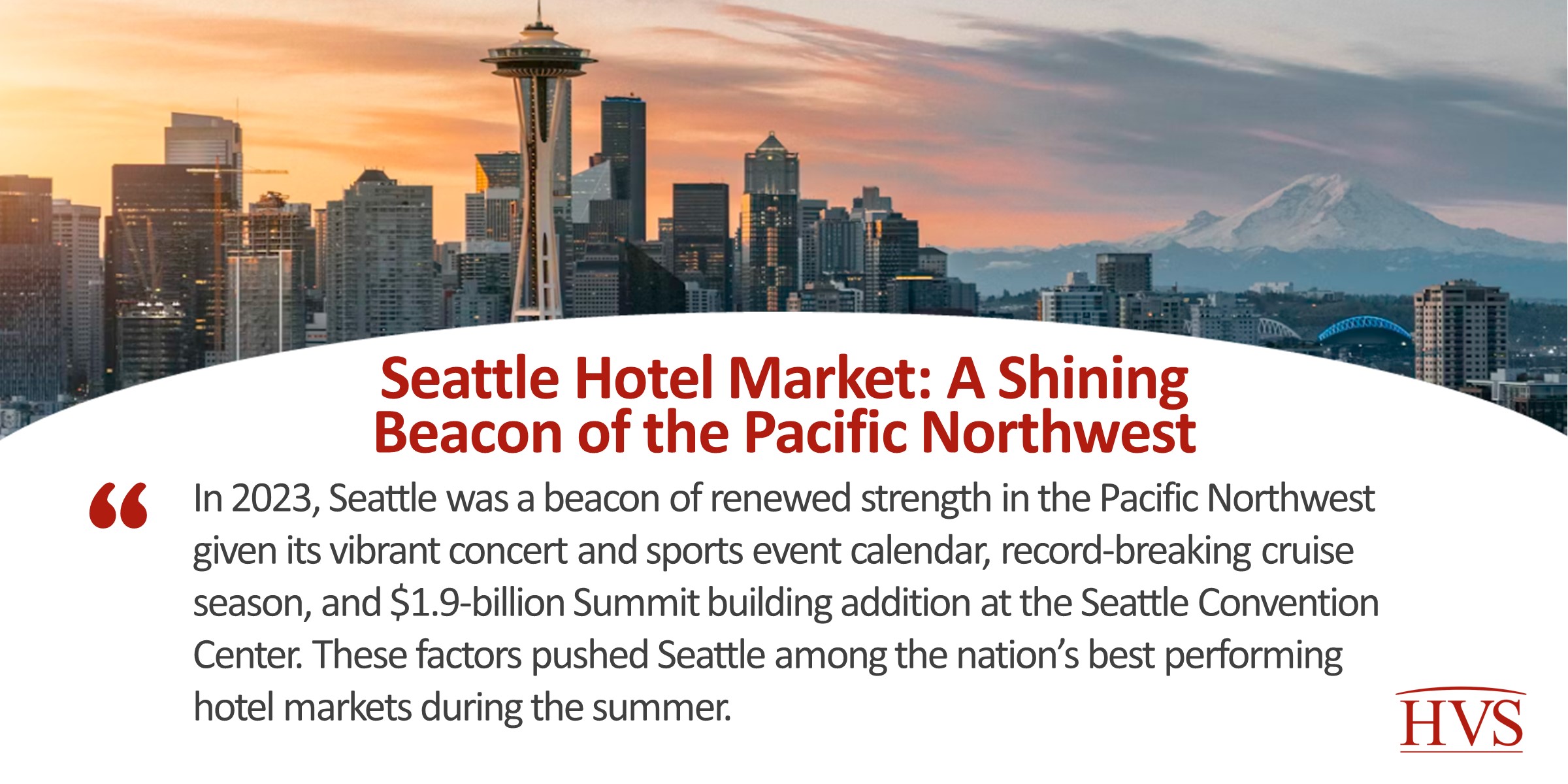
In 2023, Seattle was a beacon of renewed strength in the Pacific Northwest given its vibrant concert and sports event calendar, record-breaking cruise season, and $1.9-billion expansion of the Seattle Convention Center. As a result of these factors, Seattle was one of the nation’s best-performing hotel markets during the summer.
Hotels in the Houston area faced a significant RevPAR decline in 2020, and at the beginning of 2023, the market is again contending with uncertainty surrounding rising inflation, risk of a potential economic slowdown, and volatility in its largest industry. In this article, we take a look at Greater Houston lodging recovery thus far and the outlook for the future.
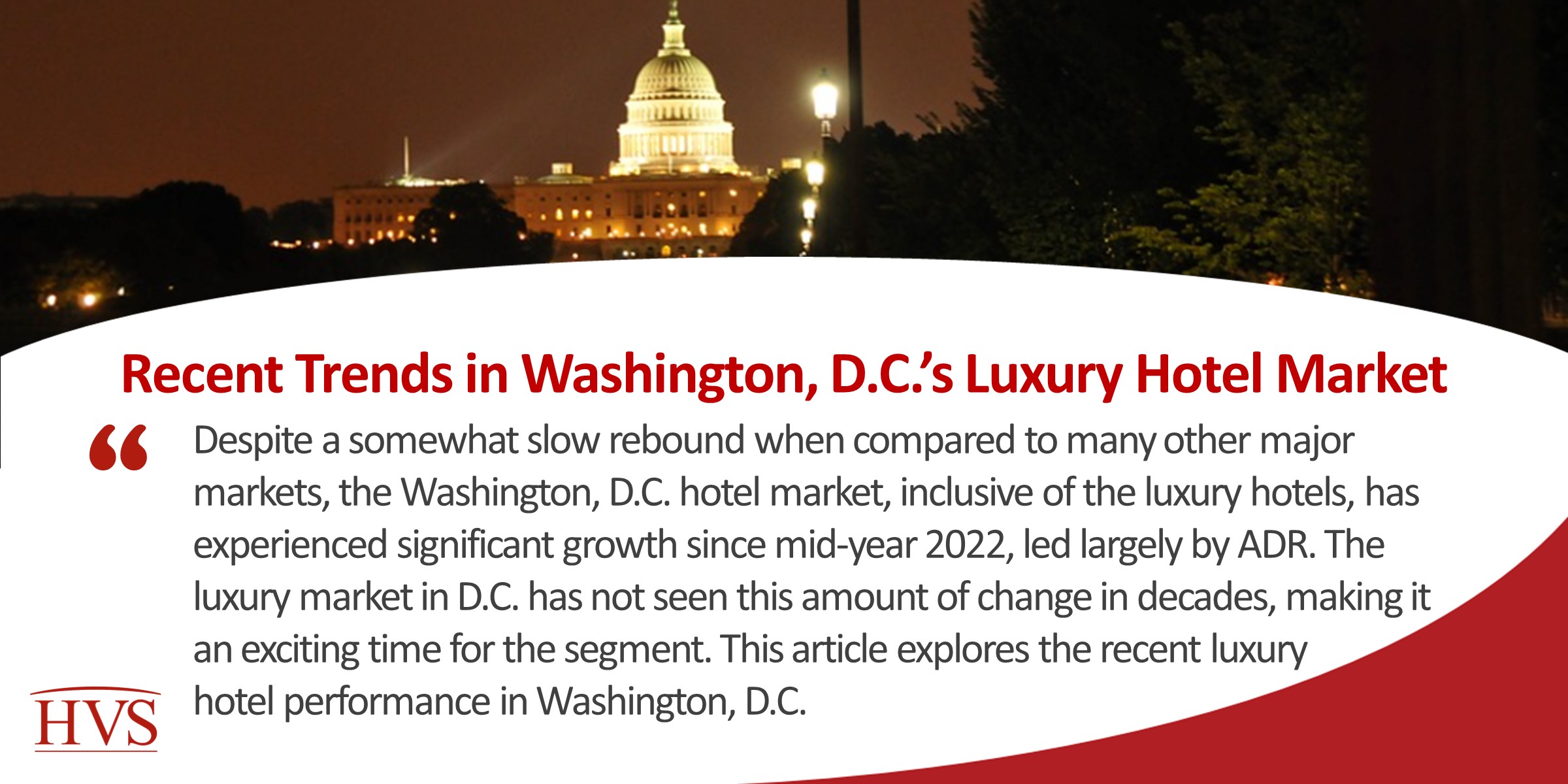
Despite a somewhat slow rebound when compared to many other major markets, the Washington, D.C. hotel market, inclusive of the luxury hotels, has experienced significant growth since mid-year 2022, led largely by ADR. The luxury market in D.C. has not seen this amount of change in decades, making it an exciting time for the segment. This article explores the recent luxury hotel performance in Washington, D.C.
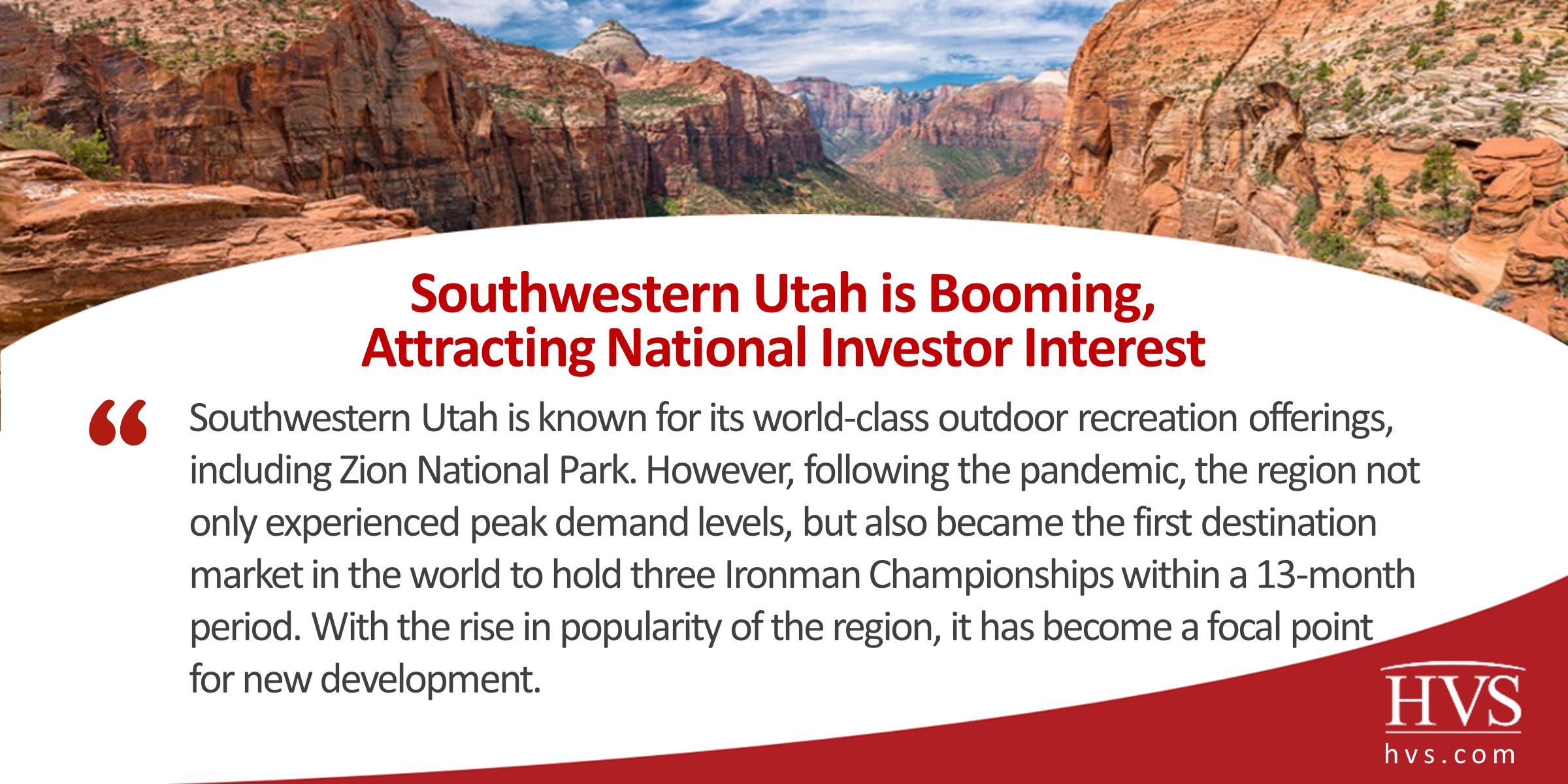
Southwestern Utah is known for its world-class outdoor recreation offerings, including Zion National Park. However, following the pandemic, the region not only experienced peak demand levels, but also became the first destination market in the world to hold three Ironman Championships within a 13-month period. With the rise in popularity of the region, it has become a focal point for new development.
While New York City has been the focus of discussion around the state’s pandemic recovery, the Finger Lakes, the Adirondacks, and the Catskills/Hudson Valley markets have offered some of the biggest surprises. This article looks at how these three resort markets have fared throughout the pandemic, as well as the factors affecting their recent performance.
The Twin Cities hotel market has suffered a greater loss than that of the nation given the combined impact of the COVID-19 pandemic and civil unrest. Many hotels suspended operations between April and June, with little activity taking place in urban cores. How far has the market fallen, and what will the next few years look like?
Since early March 2020, the greater Houston area hotels have suffered unprecedented declines in demand, similar to most cities in the United States, because of the COVID-19 pandemic. How far has the Houston hotel market fallen? How does this compare to the last recession? What will the recovery look like?